
The Chinese Wall: Montana's Hidden Natural Wonder
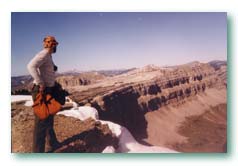
Deep in the heart of the Bob Marshall Wilderness, far from any road or trail accessible by vehicle, a massive wall of limestone rises from the valley floor and stretches for 22 miles along the Continental Divide. The Chinese Wall is one of the most spectacular geological formations in the Northern Rockies, and reaching it requires the kind of commitment that keeps the crowds away. For those who make the journey, it is an experience that redefines scale.
The Geology Behind the Wall
The Chinese Wall is composed of Paleozoic limestone, rock that was deposited on an ancient seafloor roughly 350 million years ago. Over the eons, tectonic forces lifted this sedimentary layer thousands of feet above sea level, and the relentless work of glaciers and erosion carved the dramatic escarpment visible today.
The wall itself rises between 800 and 1,200 feet above the surrounding terrain, presenting a nearly vertical face that catches the light differently throughout the day. In the morning, the limestone glows amber and gold; by afternoon, shadows carve deep relief into the cliff bands; and at sunset, the entire formation turns a deep rose that fades to purple as twilight settles. The geological processes that created this feature are similar to those that formed the great reef formations visible throughout the Northern Rockies.
Fossils are embedded in the limestone throughout the formation. Crinoid stems, brachiopods, and coral fragments tell the story of a tropical sea that once covered what is now the Montana high country. Walking along the base of the Chinese Wall is, quite literally, walking through deep time.
Getting There: Trail Access
There is no easy way to reach the Chinese Wall, and that is precisely the point. The most common access routes begin at trailheads along the Rocky Mountain Front or from the west side via the Spotted Bear River drainage. Regardless of your approach, plan on a minimum of 20 miles of backcountry travel to reach the wall.
From the West: Spotted Bear Trailhead
The Spotted Bear trailhead provides access via the South Fork of the Flathead River trail. From here, the route follows the South Fork upstream, passing through dense forest, open meadows, and several creek crossings before reaching the base of the Chinese Wall near its southern terminus. The total one-way distance is approximately 30 miles, making this a three to four day horseback approach or a challenging four to five day backpacking route.
From the East: Benchmark Trailhead
The Benchmark trailhead, located at the end of a gravel road west of Augusta, Montana, offers a slightly shorter approach via the South Fork of the Sun River. The trail climbs steadily through the Sun River Game Range before entering the wilderness and reaching the northern end of the Chinese Wall. One-way distance is roughly 22 miles. The Lewis and Clark National Forest maintains these trails and can provide current conditions.
What to Expect at the Chinese Wall
Arriving at the base of the Chinese Wall after days on the trail produces a sensation that is difficult to describe and impossible to photograph adequately. The sheer vertical scale of the formation dwarfs everything around it — the trees, the meadows, even the mountains beyond seem diminished by comparison.
The meadows below the wall are carpeted with wildflowers from late June through August. Indian paintbrush, lupine, beargrass, and glacier lilies create a tapestry of color against the gray-white limestone backdrop. Mountain goats traverse the cliff faces with improbable grace, and golden eagles ride the thermals that form along the wall's edge.
I have been bringing people to the Chinese Wall for over forty years, and every single time, there is a moment when they stop talking and just stare. You cannot prepare someone for the scale of this place. The photographs do not do it justice. Nothing does, except being there.
Several excellent camping areas exist along the base of the wall, particularly near the junction with Moose Creek and along the White River drainage. Water is abundant from snowmelt-fed streams, and the open meadows provide grazing for horses and mules. Bear activity is common throughout the area — proper food storage is mandatory, and carrying bear spray is strongly recommended.
Best Time to Visit
The window for visiting the Chinese Wall is relatively narrow, dictated by snowpack and trail conditions. Most years, the trails are clear enough for travel by mid-June, though snow patches may persist on north-facing slopes and higher passes into early July.
July and August offer the most reliable weather and the best wildflower displays. Daytime temperatures at the wall's elevation (approximately 7,500 feet) typically range from the mid-50s to low 70s Fahrenheit, with cool nights in the 30s and 40s. Afternoon thunderstorms are common and can be intense — always carry rain gear and be prepared to wait out lightning.
September brings fall color, fewer visitors, and the possibility of early snow. The larch forests in the surrounding drainages turn brilliant gold in late September, adding another dimension to an already extraordinary landscape. By mid-October, winter conditions can settle in quickly, making travel more difficult and potentially dangerous.
Horseback Trips to the Chinese Wall
Salmon Forks Outfitters has been running horseback trips to the Chinese Wall since before the Bob Marshall Wilderness was formally designated in 1964. On horseback, the journey to the wall is not just manageable — it is magnificent. You travel through some of the finest wilderness country in America, fording rivers, climbing passes, and camping in meadows that have not changed since Lewis and Clark passed through this region two centuries ago.
Our Chinese Wall trips typically run five to seven days, allowing time for the approach, two or three days exploring the wall and surrounding country, and the return journey. We provide all camping equipment, food prepared by our camp cook, and reliable mountain horses and mules. Anglers can fish the South Fork tributaries along the way, and wildlife viewing opportunities are constant — grizzly bears, mountain goats, elk, mule deer, and an array of bird species inhabit this country.
The Chinese Wall is one of those rare places where the reality exceeds the expectation. No matter how many photographs you have seen, the first time you round the bend and see that wall of limestone stretching to the horizon, you understand why some places deserve to remain wild.
For information about guided trips to the Chinese Wall, reach us at [email protected] or (406) 387-4405.
Related Articles
Historic Fire Lookouts of the Bob Marshall Wilderness
Scattered across the ridgelines, historic fire lookouts offer unmatched panoramic views and a glimpse into early forest conservation.
Horseback Pack Trip Essentials: Your Bob Marshall Packing List
Everything you need for a multi-day horseback trip into the Bob Marshall Wilderness.