
Westslope Cutthroat Trout: Catch and Release Best Practices
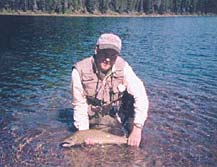
The westslope cutthroat trout is Montana's state fish and one of the most beautiful native trout species in North America. In the Bob Marshall Wilderness, these fish inhabit the same cold, clear streams they have occupied for thousands of years, largely free from the hybridization and competition that have diminished populations elsewhere. Catching a genetically pure westslope cutthroat in its native water is a privilege, and releasing it properly ensures that privilege endures for future anglers.
Identifying Westslope Cutthroat Trout
The westslope cutthroat trout (Oncorhynchus clarkii lewisi) is named for the distinctive red-orange slash marks beneath its lower jaw. These markings are the most reliable field identification feature and are present on every individual, though their intensity varies with age, sex, and time of year.
Additional identifying characteristics include:
- Spotting pattern: Small, irregularly shaped spots concentrated toward the tail, with fewer spots toward the head. This distinguishes them from rainbow trout, which typically have spots distributed more evenly across the body.
- Coloration: Olive to greenish-bronze on the back, fading to silvery or yellowish sides with a rosy flush along the lateral line. Spawning males develop vivid red-orange on the belly and gill plates.
- Size: In the Bob Marshall's streams, most cutthroat range from 8 to 14 inches. Fish exceeding 16 inches are notable, and anything over 18 inches is a genuine trophy in these waters.
- Teeth: Small basibranchial teeth on the tongue — a diagnostic feature of all cutthroat subspecies, though checking for these in the field is impractical and unnecessary.
The Montana Fish, Wildlife & Parks has invested heavily in protecting genetically pure westslope cutthroat populations. The Bob Marshall Wilderness serves as one of the most important refugia for this subspecies, containing some of the largest remaining populations of unhybridized fish.
Why Catch and Release Matters
Westslope cutthroat trout are not stocked in the Bob Marshall — every fish you catch is wild-born, the product of natural reproduction in streams that have supported cutthroat for millennia. These populations are self-sustaining but not inexhaustible. Cutthroat trout grow slowly in cold mountain streams, and a 14-inch fish may be eight to ten years old.
Unlike hatchery-raised trout that are bred for rapid growth and stocked to be harvested, wild cutthroat have evolved to survive in a specific environment. Each fish represents a genetic lineage adapted to the particular conditions of its home stream — water temperature, flow patterns, insect communities, and predator pressure. Removing these fish from the population diminishes the genetic diversity that makes the population resilient.
In many sections of the Bob Marshall, regulations require catch and release for cutthroat trout. Even where harvest is permitted, we strongly encourage releasing every cutthroat you catch. The experience of holding a wild, native trout in clear mountain water is its own reward.
Best Practices for Catch and Release
Proper catch and release technique begins before you set the hook and continues until the fish swims away under its own power. Every step matters.
Use Barbless Hooks
Barbless hooks are easier to remove, cause less tissue damage, and significantly improve survival rates for released fish. Pinch the barbs on your hooks with hemostats before you start fishing. The slight increase in missed strikes is more than offset by faster, cleaner releases. Many wilderness regulations in Montana already require barbless hooks — check current rules for the specific drainage you are fishing.
Play the Fish Quickly
Extended fights exhaust trout and flood their muscles with lactic acid, which can be fatal even after release. Use a rod and tippet strong enough to land fish efficiently. In the Bob Marshall, you rarely need tippet lighter than 4X for cutthroat — these fish are not leader-shy, and heavier tippet lets you bring them to hand quickly.
Keep the Fish in Water
A trout's gills collapse when exposed to air, similar to what happens to human lungs underwater. Limit air exposure to an absolute minimum — ideally, the fish never leaves the water. If you must lift the fish for a photograph, wet your hands first, support the fish horizontally with one hand under the belly and one near the tail, and limit air time to no more than ten seconds. The catch and release research consistently shows that air exposure is the single greatest predictor of post-release mortality.
Handle With Wet Hands
Trout are covered in a protective slime coat that shields them from infection and parasites. Dry hands, gloves, or nets strip this coating and leave the fish vulnerable to disease. Always wet your hands thoroughly before touching a fish. If you use a landing net, choose one with a soft, rubberized mesh — knotted nylon nets damage both the slime coat and the fish's delicate fins.
Remove the Hook Carefully
With barbless hooks, removal is usually a simple matter of backing the hook out along the path it entered. Use hemostats for deeply set hooks. If the fish has swallowed the fly and the hook is not visible, cut the tippet as close to the hook as possible and release the fish — the hook will corrode and fall out within days, and attempting removal will cause more damage than leaving it in place.
Revive and Release
Hold the fish upright in the current, facing upstream, with one hand gently supporting the belly and the other cradling the tail. Allow water to flow over the gills. When the fish begins to kick and pulls against your hand, it is ready to go. Open your fingers and let it swim away on its own. Do not toss or push the fish — a disoriented trout released into fast water may tumble downstream and sustain further injury.
Watch the fish after you release it. A healthy release looks like an unhurried departure — the fish holds in the current for a moment, regains its orientation, and then moves deliberately to cover. If the fish rolls or drifts, recover it gently and continue reviving until it can swim strongly.
Water Temperature and Fishing Ethics
Water temperature is a critical factor in catch and release survival. Trout are cold-water species, and their physiology becomes stressed as water temperatures rise. When stream temperatures exceed 65 degrees Fahrenheit, the dissolved oxygen content drops and the fish's metabolic rate increases, making the stress of being caught and handled potentially lethal.
In the Bob Marshall, water temperatures rarely reach dangerous levels in the upper drainages, but lower elevation streams can warm significantly during July and August afternoons. If you notice trout that are sluggish, listless, or seeking refuge near cold-water springs and tributary mouths, stop fishing. The ethical angler recognizes when conditions are too stressful for the fish and puts the rod away.
Conservation of Native Trout
The westslope cutthroat trout once occupied streams from the Pacific Coast to the headwaters of the Missouri River. Today, genetically pure populations occupy less than 10 percent of their historic range. The Bob Marshall Wilderness represents one of the largest and most secure remaining habitats, but even here, threats exist. Non-native species introduced into downstream waters can migrate upstream, and warming water temperatures associated with climate change are gradually shifting the thermal envelope of suitable habitat.
Every angler who practices careful catch and release in the Bob Marshall contributes to the survival of this remarkable species. The fish we release today are the parents of tomorrow's populations, carrying forward genetic adaptations refined over thousands of generations. It is a responsibility worth taking seriously.
For more information about fly fishing for cutthroat trout in the Bob Marshall, contact us at [email protected] or (406) 387-4405.
Related Articles

Fly Fishing in the Bob Marshall Wilderness: A Complete Guide
Best rivers, native trout species, seasonal hatches, and gear recommendations.
Family-Friendly Wilderness Adventures in Northwest Montana
Introducing children to fishing, hiking, and wildlife in Montana's backcountry.