
Why Mules Are the Best Trail Companions in Montana
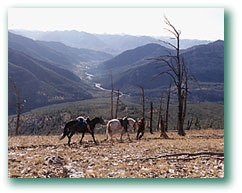
In the backcountry of Montana, where trails snake along cliff edges, cross swollen rivers, and climb through rockslides, the humble mule has earned a reputation that no other pack animal can match. For nearly a century, Salmon Forks Outfitters has relied on mules to carry gear, supplies, and occasionally reluctant cargo into the heart of the Bob Marshall Wilderness. They are not glamorous animals, but they are extraordinary ones.
The Anatomy of Sure-Footedness
A mule is the offspring of a male donkey and a female horse, and this crossbreeding produces an animal that inherits the best physical traits of both parents. From the donkey side, mules receive smaller, harder hooves with a more upright angle. These compact hooves grip rocky terrain with a precision that horse hooves simply cannot match.
Mules also inherit what packers call a natural sense of self-preservation. Unlike horses, which can be pushed past the point of safety by a determined rider, mules will stop and assess a dangerous situation before proceeding. A horse may charge blindly across a crumbling trail; a mule will plant its feet, study the ground, and choose its path carefully. This trait has saved countless lives and loads in the mountains.
Their legs are proportionally stronger than a horse's, with denser bone and tougher tendons. A well-conditioned pack mule can carry 20 percent of its body weight over rough terrain for extended distances without lameness or fatigue. That translates to roughly 150 to 200 pounds of gear per mule — enough to make wilderness living not just possible but comfortable.
Intelligence and Temperament
The popular image of mules as stubborn creatures is a misunderstanding of their intelligence. Mules are not stubborn — they are cautious. They process information before acting, a trait that makes them safer in unpredictable mountain environments. A horse in a panic may bolt off a trail edge; a mule is far more likely to freeze in place and wait for direction.
Mules also possess an excellent memory for terrain. A mule that has traveled a trail once will remember hazards, water crossings, and problem areas years later. Our string includes several mules that know the trails of the Bob Marshall better than most humans, and they routinely correct course when riders or packers miss a turn.
I have seen a mule stop dead on a narrow trail where a bridge had washed out three months prior. The mule had not been on that trail since the bridge was intact, but it remembered where the crossing was and refused to proceed until the packer dismounted and scouted ahead. That is not stubbornness — that is intelligence.
Their social behavior is notably different from horses as well. Mules tend to be more independent and less prone to herd-bound anxiety. A horse separated from its companions may become agitated and difficult to manage; a mule generally takes the separation in stride. This independence makes them reliable on the trail even when traveling as a single pack animal rather than as part of a string.
Mules vs. Horses in the Backcountry
Both mules and horses have their place in wilderness outfitting, and we use both at Salmon Forks. Horses are preferred for riding because of their smoother gait and greater responsiveness to rein cues. Most guests find horses more comfortable for long days in the saddle. But when it comes to packing gear into the wilderness, mules are the clear choice.
| Trait | Mule | Horse |
|---|---|---|
| Footing on rocky terrain | Superior | Good |
| Pack weight capacity (% body weight) | 20% | 15-18% |
| Water consumption | Lower | Higher |
| Feed efficiency | Better — thrives on rough forage | Requires better quality feed |
| Longevity (working years) | 30+ | 20-25 |
| Self-preservation instinct | Strong | Moderate |
| Riding comfort | Rougher gait | Smoother |
Mules also require less feed and water than horses of equivalent size, a significant advantage on multi-day wilderness trips where grazing quality varies. The hybrid vigor that results from crossbreeding gives mules greater resistance to disease and a constitution that allows them to work harder on less nutrition than a purebred horse.
The History of Mules in Montana
Mules have been working in the mountains of Montana for as long as people have been venturing into them. The Lewis and Clark Expedition relied on horses obtained from the Nez Perce, but later explorers and miners quickly discovered that mules were better suited to the steep, rocky terrain of the Northern Rockies.
By the early 1900s, the U.S. Forest Service was using mule strings extensively to supply fire lookouts, ranger stations, and trail crews throughout the Bob Marshall and surrounding wilderness areas. Many of the trails we ride today were originally built and maintained by crews supplied entirely by mule train.
During both World Wars, the U.S. Army maintained mule packing schools in the western states, recognizing that in mountainous terrain, mechanized transport was no substitute for a well-trained pack mule. Some of those military-trained packers returned to Montana after the wars and became wilderness outfitters, bringing with them a level of packing expertise that has been passed down through generations.
Training and Care of Pack Mules
A good pack mule does not happen by accident. Training begins when the animal is young, with gradual exposure to the sights, sounds, and sensations of the trail. Mules are introduced to pack saddles and loads incrementally, starting with empty panniers and working up to full loads over months of patient handling.
The key to a well-trained mule is consistency and fairness. Mules respond poorly to rough treatment — they remember every injustice and every kindness. A mule that has been treated fairly will work willingly for years; a mule that has been abused will find ways to make your life difficult that you never imagined possible.
At Salmon Forks, our mules are part of the family. They spend winters on pasture, spring months getting conditioned with short pack trips, and the summer and fall seasons working in the wilderness. Each mule has a personality, preferences, and quirks that our packers know intimately. Matching the right mule to the right load and the right position in the string is an art form that takes years to learn.
The working life of a well-cared-for mule can extend well past 30 years, and several of our current string have been with us for over two decades. They have earned their keep a thousand times over, and they remain as reliable on the trail today as they were in their youth — perhaps more so, given the depth of experience they carry.
For questions about our pack trips and the mules that make them possible, contact us at [email protected] or (406) 387-4405.
Related Articles
Horseback Pack Trip Essentials: Your Bob Marshall Packing List
The right gear keeps you comfortable and safe on a multi-day backcountry horseback trip.
The Chinese Wall: Montana's Hidden Natural Wonder
A massive limestone formation stretching 22 miles along the Continental Divide — best reached by horseback.
Family-Friendly Wilderness Adventures in Northwest Montana
Gentle trails and calm waters that families remember for generations.